Remote troubleshooting for Adyen’s payment devices, so a broken terminal gets fixed in store in minutes instead of being swapped out over days. I led the design from ranking the top support issues to launch.
- Company
- Adyen provides payment solutions to more than 5,000 customers, including Nike, Adidas, Chanel, Hermès, Netflix, Microsoft, Booking.com and Spotify.
- Industry
- Point of sale
- Year
- 2023–2024
Context
A device in a drawer is a till that’s closed
With more than half a million devices in the field, you never know where a payment device might end up, or when it might stop working altogether. As soon as one did, it usually ended up in a drawer, waiting for a replacement to arrive. Every minute a device is out of use means lost sales and frustrated shoppers.
Problem and user needs
A two-sided problem
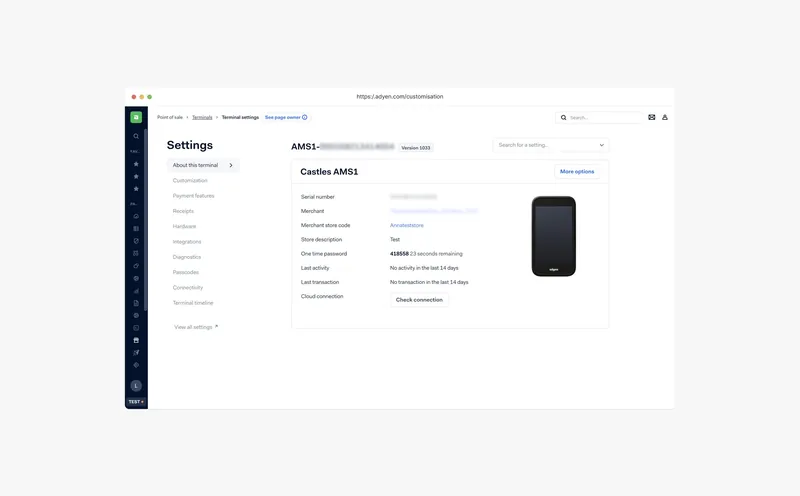
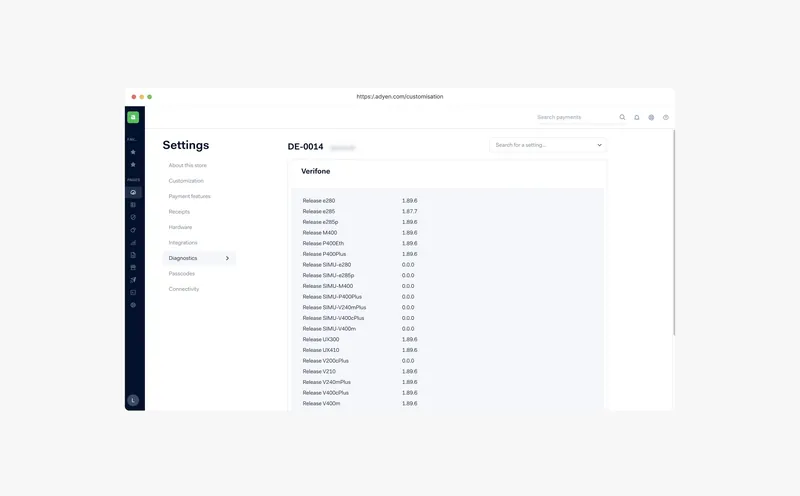
Store staff were afraid to troubleshoot, so they escalated straight away. Support had no tools to see what was happening, so they could only guide staff over the phone.
500K+
devices in the field
25%+
of returned devices in 2023 had no fault found
~100K
in preventable returns
Two-sided problem.
End users were hesitant to troubleshoot, and support lacked the tools to help them.
No visibility.
Nobody, from support to the business owner, could see the health of their device estate.
Asynchronous process.
Hours could pass between a device failing, a ticket being raised and someone responding.
User needs
Store staff
Know if the device is fit to take payments, and what to do when it isn’t, without calling anyone.
Tech Support
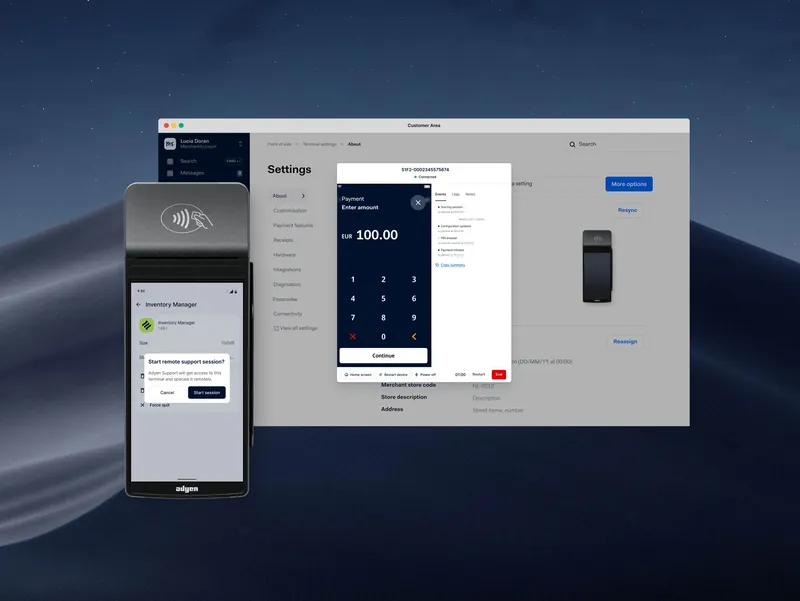
See a device’s status and fix it remotely, in one session.
Business needs
Business admins
An overview of every device in their stores and which ones need attention.
Adyen
Fewer unnecessary returns and replacements.
Approach
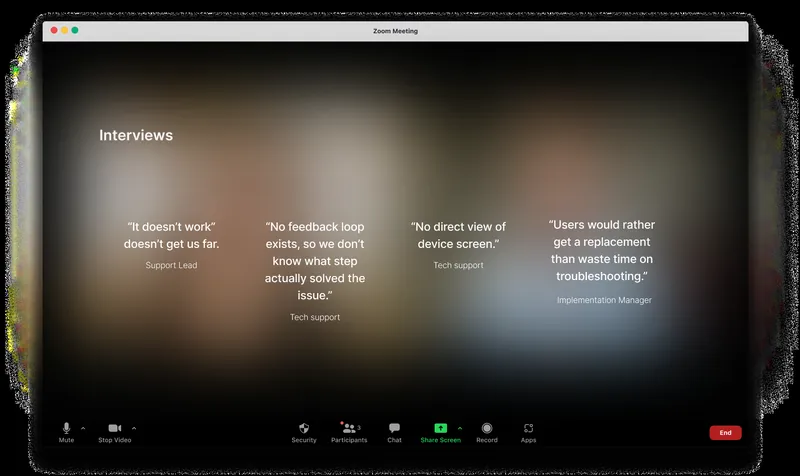
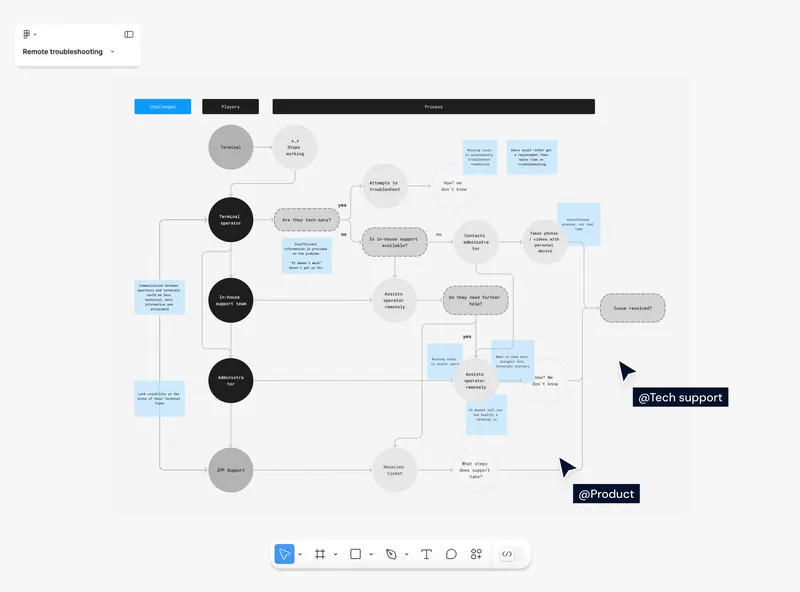
After shadowing tech support, I led a collaborative design session with them to map out the current state of affairs and brainstorm possible solutions.
- Goal
- Find which issues staff or support could solve without a replacement.
- Input
- Support tickets and replacement data
- Outcome
- Most network related issues could be fixed remotely with adequate tooling.
- Stakeholders
- Product, Engineering, Tech Support, and partners EposNow, Toast and Palisis
Findings
Iterations
Where should a remote session live?
Support agents are power users of our back office, so the session had to fit into how they already worked. I explored a few first concepts:
A new tab.
The session opens on its own, away from the device page.
Taking over the page.
A side panel covers the page the agent is on.
Embedded in the page.
The session sits next to the device’s details.
A modal over the list.
The session opens in a window on top of the Terminals list.
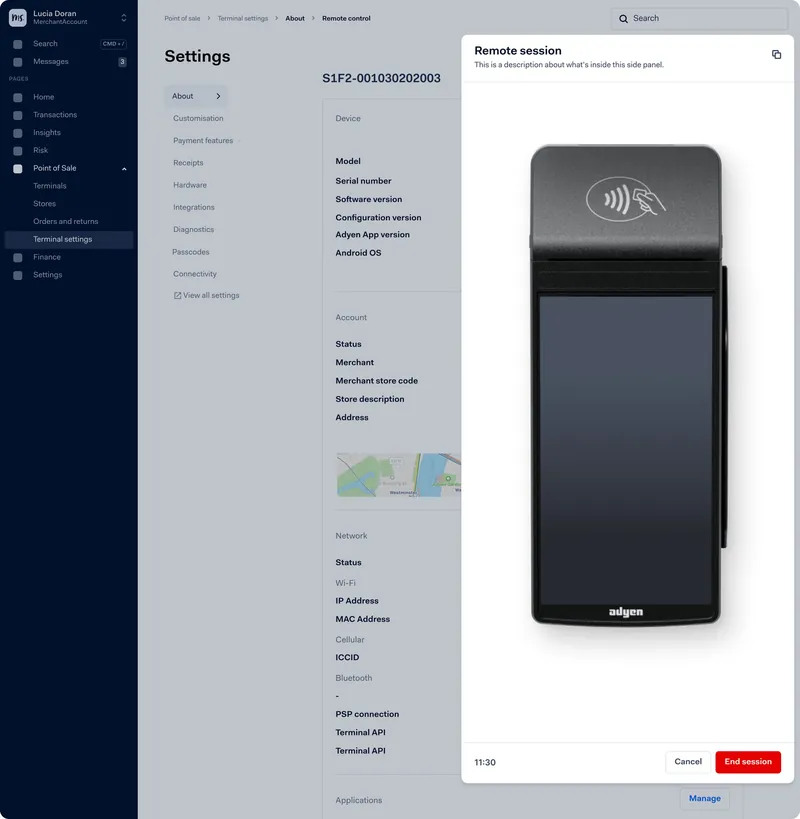
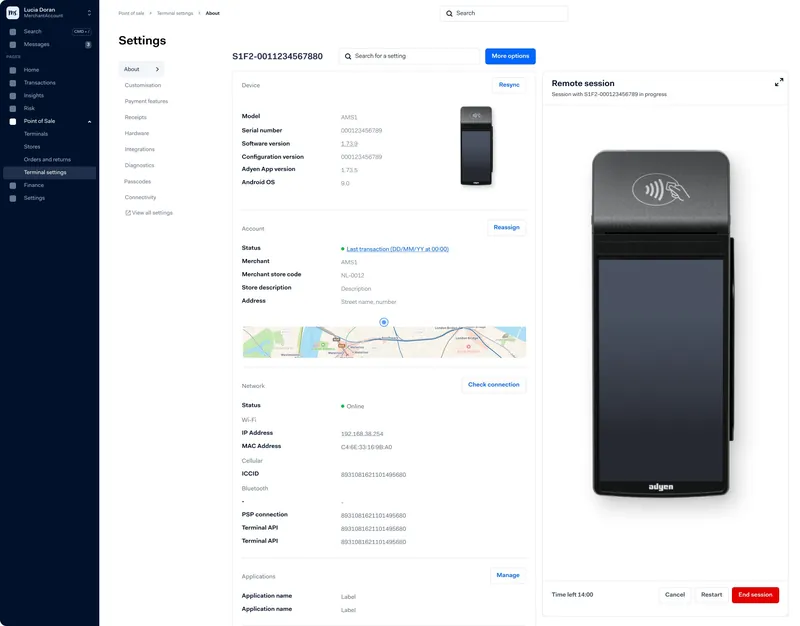
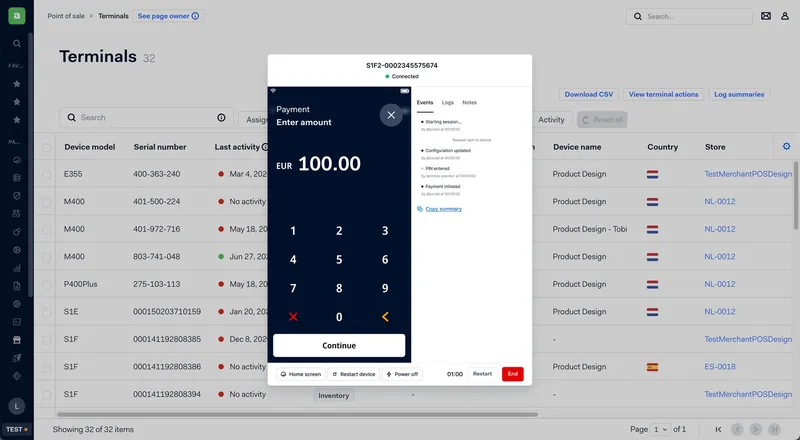
Interviews and prototyping made it clear that being able to multitask mattered most. I went with an almost full-screen modal that agents can collapse whenever they need to go back to a page and finish the diagnostics.
Solution
What we shipped
Impact
Fixed in minutes, instead of days
Fully autonomous
End to back and forth
Admins and support can now troubleshoot autonomously, reducing the number of touchpoints.
Fixed in minutes
4.5×
faster at resolving network issues. Incidents that could take days are solved in one remote session.
Immediate adoption
5
active merchants piloted it straight away, as our collaborative approach with Tech Support and customers (EposNow, Toast, Palisis) led to quick adoption from everyone involved.
Learnings
A double-edged sword.
The same problem can feel very different depending on where you are: an annoyance in the back office, a crisis at a busy till.
What you want might not be what you need.
Staff were so used to asking for a replacement that they’d lost faith in their own ability to fix things. Reducing the cognitive load gave them back a sense of control.